
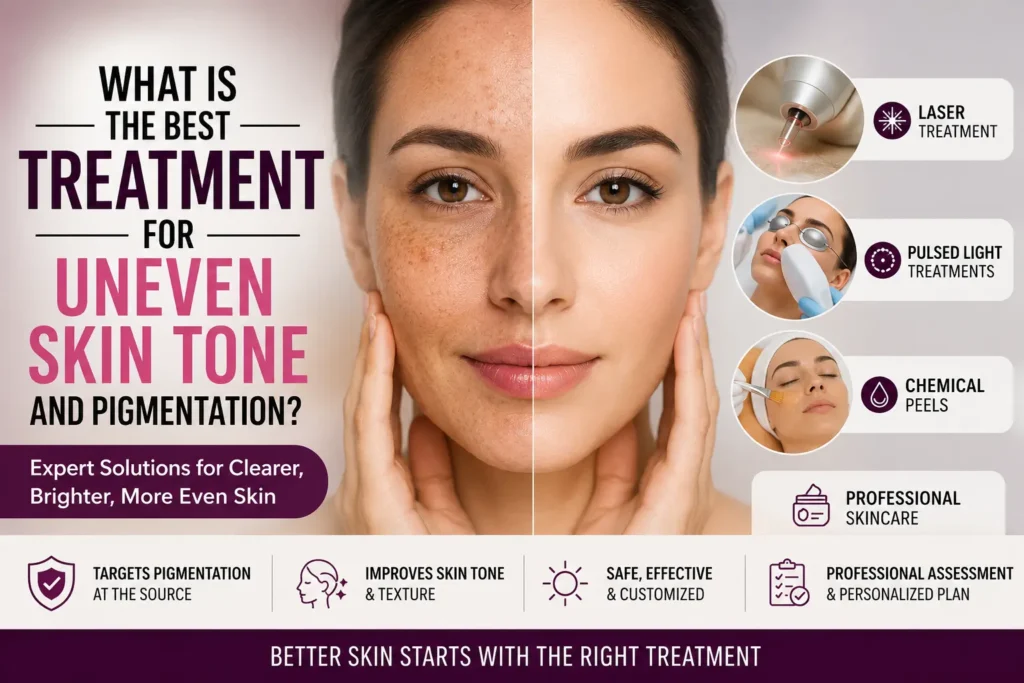

Uneven skin tone and pigmentation are common aesthetic concerns. Dark spots, sun damage, post-acne marks, and other forms of pigmentation can make the complexion appear uneven.
Modern aesthetic treatments offer several ways to address these concerns, but choosing the right treatment starts with understanding what is causing the pigmentation.
What Causes Skin Pigmentation?
Pigmentation occurs when melanin production or distribution changes within the skin.
Common factors include:
- Sun exposure
- Hormonal changes
- Acne and inflammation
- Skin injuries
- Certain medications
- Natural aging
Different types of pigmentation can respond differently to treatment. This is why simply choosing the strongest laser or peel is not always the best approach.
Can Laser Treatment Improve Pigmentation?
Certain laser technologies can target pigment within the skin.
Q-switched Nd:YAG technology, for example, can be used for selected pigmented lesions and other aesthetic applications.
The wavelength and treatment parameters can be adjusted according to the specific indication.
For clinics looking for versatile professional equipment, EvoSkin’s Xlase Plus platform combines different laser and light technologies for applications including pigmentation, skin resurfacing, vascular lesions, hair removal, and tattoo removal.
What About Pulsed Light Treatments?
Calibrated Pulsed Light, commonly known as CPL, is another technology used for selected pigmentation and photo-rejuvenation concerns.
Unlike a single-wavelength laser, pulsed light systems can use different filters to target specific applications.
CPL may be used in professional aesthetic settings for concerns such as superficial pigmented lesions, vascular lesions, acne, and photo-rejuvenation.
The suitability of light-based treatment depends on the individual’s skin and the type of pigmentation being addressed.
Can Chemical Peels Help?
Professional chemical peels can also help improve uneven skin tone and texture.
Mandelic acid is one ingredient used in professional peel treatments. It provides controlled exfoliation and can be incorporated into protocols targeting concerns such as acne, pigmentation, and photoaging.
Professional peels should be selected and administered according to the individual’s skin condition rather than being treated as a generic skincare solution.
What About Home Skincare?
Professional treatment is only one part of managing pigmentation.
Daily skincare and sun protection are particularly important because continued UV exposure can contribute to pigmentation and may make it harder to maintain improvements.
A basic routine may include:
- Broad-spectrum sunscreen
- Gentle cleansing
- Appropriate moisturization
- Professionally recommended active ingredients
- Avoiding unnecessary irritation
People with pigmentation concerns should be particularly careful about aggressive or untested home treatments.
Why Is Professional Assessment Important?
Not every dark mark has the same cause.
Melasma, post-inflammatory hyperpigmentation, sun spots, and other pigmentation conditions can require different approaches.
A professional assessment can help determine:
- The likely type of pigmentation
- Whether laser treatment is appropriate
- Whether light-based treatment may be suitable
- Whether a chemical peel is appropriate
- How aggressive treatment should be
- What maintenance will be required
This can reduce the risk of choosing an unsuitable treatment.
Can Treatments Be Combined?
In some cases, yes.
A practitioner may recommend a combination of professional treatment and home skincare rather than relying on a single procedure.
For example, a patient might receive a suitable laser or light-based treatment alongside a professionally recommended skincare routine.
However, combining treatments does not automatically produce better results. The timing and compatibility of each treatment should be professionally assessed.
How Long Does Treatment Take to Work?
Results vary considerably.
Some pigmentation concerns may respond relatively quickly, while others require multiple sessions and ongoing maintenance.
It is also possible for pigmentation to return if the underlying triggers are not managed.
Sun protection is therefore an important part of maintaining any improvement.
Final Thoughts
There is no universal treatment that works best for every pigmentation concern.
Laser technology, pulsed light, professional chemical peels, and carefully selected skincare can all have a role depending on the type and cause of pigmentation.
The most important step is to identify the concern before selecting a treatment.
Anyone considering an aesthetic pigmentation treatment should consult a qualified professional who can assess their skin and recommend an appropriate approach based on their individual needs and risk factors.
For aesthetic professionals exploring professional skincare solutions, EvoSkin also offers its Mandel Professional Line as part of its range of professional aesthetic and skincare products.