
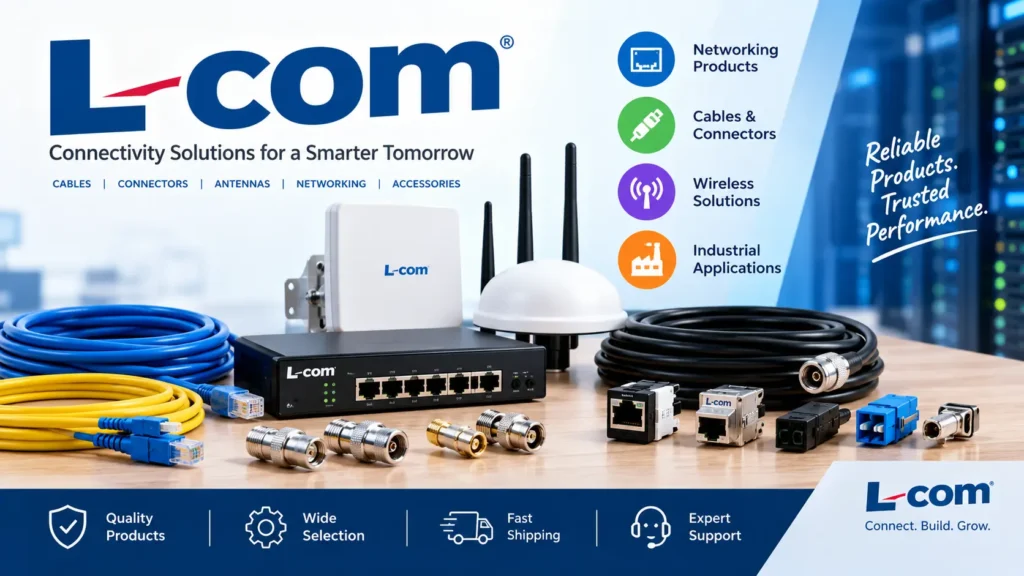

Reliable connectivity is an important part of modern technology. Businesses, technicians, data centers, and everyday users all depend on cables, connectors, antennas, and networking accessories to keep devices connected. L-com is a company known for providing a broad range of connectivity products for networking, wireless, industrial, and communication applications.
With many different products available, understanding the main categories and their potential uses can help customers choose suitable solutions for their projects.
What Is L-com?
L-com is a connectivity products provider offering equipment and accessories used in networking and electronic communication applications. Its product range covers various types of cables, connectors, adapters, antennas, and related connectivity components.
The company serves different technical requirements, from standard networking connections to specialized industrial and wireless applications. This broad selection can make the brand relevant to engineers, installers, IT professionals, and businesses that need connectivity hardware.
Networking Products
Networking is one of the key areas where connectivity products are required. Ethernet cables, patch cables, connectors, and related accessories help devices communicate across wired networks.
When selecting a networking product, users should consider factors such as cable type, connector type, length, performance requirements, and installation environment. Choosing a product that matches the equipment and network requirements can help create a reliable connection.
L-com provides different networking-related products that can be used for various installation and communication needs.
Cables and Connectors
Cables are fundamental components of many electronic and networking systems. Different applications require different cable designs and connector types.
For example, Ethernet cables are commonly used for network connections, while coaxial cables can be used for radio-frequency and communication applications. Other specialized cables may be designed for industrial or electronic equipment.
Connectors are equally important because they provide the physical connection between cables and devices. The correct connector must match the equipment and cable specifications.
Before purchasing a cable or connector, users should carefully check dimensions, compatibility, specifications, and intended application.
Wireless Connectivity Solutions
Wireless communication is another important area of modern networking. Antennas and related RF components can be used to support wireless communication systems.
L-com offers antennas and wireless connectivity products for different applications. Depending on the product, these solutions may be used with Wi-Fi, cellular, radio-frequency, or other wireless systems.
Wireless products should be selected based on factors such as frequency range, gain, connector type, mounting requirements, and operating environment. Technical specifications are especially important when working with RF equipment.
Industrial Applications
Connectivity equipment is also important in industrial environments. Factories, automation systems, control equipment, and other technical installations may require specialized cables and connectors.
Industrial connectivity products may need to handle conditions that are different from ordinary office environments. Factors such as temperature, moisture, vibration, physical protection, and installation location can influence product selection.
For this reason, customers should review the manufacturer’s specifications before choosing products for demanding environments.
Choosing the Right Product
With a large selection of networking and connectivity products available, choosing the right item can seem difficult. A good starting point is to identify the exact purpose of the product.
First, determine what devices need to be connected. Next, check the required cable or connector type. Users should also review length, compatibility, performance specifications, and environmental requirements.
For wireless products, frequency and antenna specifications can be particularly important. For cables, users may need to consider shielding, construction, connector style, and performance category.
Reading product specifications carefully can help reduce the possibility of ordering an unsuitable item.
Benefits of Specialized Connectivity Products
Using the appropriate connectivity hardware can make installations more organized and reliable. A suitable cable can provide the required connection between devices, while the correct connector can ensure compatibility.
Specialized products can also help address unique installation requirements. Instead of using a generic component for every situation, users can select equipment designed for a particular application.
This can be especially valuable for businesses and technical professionals managing larger networking or communication projects.
Who Can Use L-com Products?
L-com products may be useful for a variety of customers. IT professionals can use networking components for infrastructure projects, while technicians may need cables and connectors for repairs or installations.
Engineers and system integrators may also require specialized connectivity products when designing communication or industrial systems. Businesses can use networking hardware when building or upgrading their technical infrastructure.
Read Also : PushYourDesign.com Explained: Design & Creativity
Individual users may also find suitable products for smaller networking or electronic projects, provided they understand the required specifications.
Final Thoughts
L-com provides a broad selection of networking and connectivity products covering cables, connectors, antennas, adapters, and other communication components. Its product categories can serve different requirements across networking, wireless, industrial, and electronic applications.
The most important step when selecting a connectivity product is to understand the specific requirements of the project. Checking compatibility, technical specifications, dimensions, and intended use can help customers make a more informed choice.
Whether you are working on a home network, business infrastructure, wireless installation, or industrial project, choosing the right connectivity components is an important part of creating a dependable system.